
Have you ever reached into your beach bag only to find your lunch soaked by a wet towel or your expensive camera caked in fine coastal sand? It is a classic Aussie frustration that turns a great day on the water into a tedious gear-cleaning mission. Whether you are dealing with a sudden afternoon storm or trying to keep the salt air away from your tech, the struggle to stay dry is real. Finding versatile uses for a waterproof bag is the best way to protect your investment and keep your gear in peak condition.
We all agree that nothing ruins a drive home like the smell of damp carpet or the sight of sand ground into your ute seats. The good news is that you can stop the rot before it starts. You are about to learn how a few simple strategies can completely transform your outdoor routine. We will show you how to protect your electronics, streamline your storage, and even save your camping trip with some creative, field-tested hacks that go far beyond basic storage.
From acting as a portable washing machine to keeping your gear organised during a river crossing, this guide previews ten clever ways to maximise your utility in 2026. Get ready to master your next adventure with confidence and style.
Key Takeaways
- Learn how to shield your expensive tech and camera lenses from abrasive sand and fine outback dust.
- Discover versatile uses for a waterproof bag that can save your camping trip, including improvised pillows and mobile washing machines.
- Master the art of keeping your ute clean by properly containing wet gear after using a floating mat or an ice bath.
- Identify the technical specs that separate basic water-resistant pouches from professional, marine-grade dry bags.
- Find out how to choose the perfect bag size and maintain its seal for maximum longevity in harsh Aussie conditions.
What is a Waterproof Dry Bag and Why Does it Matter?
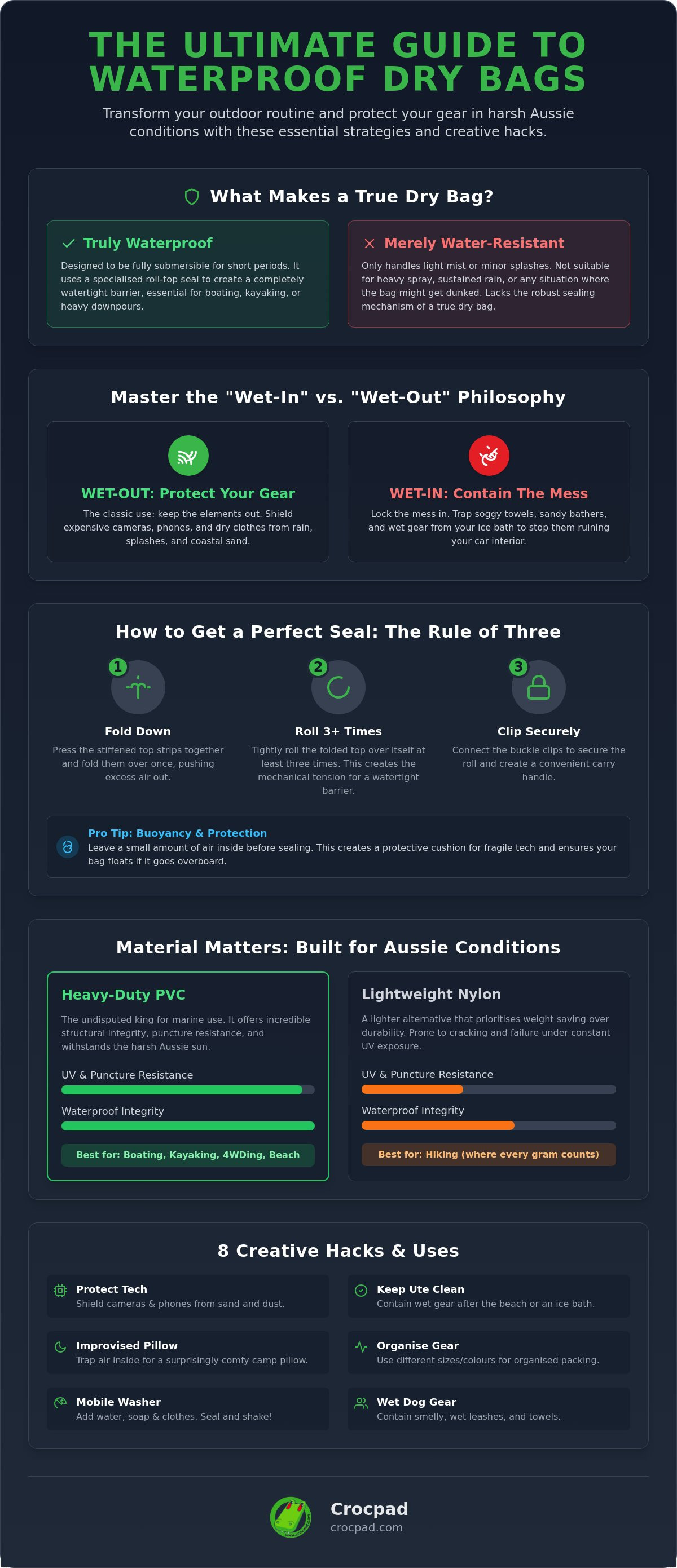
A waterproof dry bag is a rugged, flexible container designed with one specific mission: keeping the elements out or locking the mess in. Unlike your standard backpack, these bags feature a specialised roll-top seal that creates a watertight barrier. Whether you are kayaking through the Whitsundays or tossing wet gear into the back of the ute, understanding the various uses for a waterproof bag starts with appreciating its structural integrity. It is a high-performance tool built for those who refuse to let a bit of spray or rain ruin their weekend.
Don't confuse "water-resistant" with "waterproof." A resistant bag might survive a light misty morning, but for Aussie boaties facing heavy spray or a sudden downpour, only a true dry bag will suffice. If it cannot handle a brief dunking or a sustained deluge, it is not ready for the reef. High-quality gear from Crocpad ensures that your valuables remain protected even when the conditions turn sour.
To better understand this concept, watch this helpful video:
You might be tempted to use a heavy-duty bin liner, but that is a recipe for disaster. Thin plastic lacks puncture resistance; one sharp fishing hook or a stray twig will ruin the seal instantly. Professional dry bags are engineered with UV stability in mind. The Australian sun is brutal on plastics, causing cheap materials to crack and perish within a single season. Investing in a proper bag means your gear survives the heat and the salt year after year.
Gear management follows a simple "Wet-In" versus "Wet-Out" philosophy. "Wet-Out" is the standard approach of keeping dry clothes and tech safe from the ocean. Conversely, "Wet-In" uses for a waterproof bag involve containing the chaos, such as trapping soggy towels and salty bathers so they don't ruin your car interior. Both strategies are essential for a seamless day on the water.
How the Roll-Top Seal Works
Master the "Rule of Three" to ensure your gear stays bone-dry. Fold the stiffened top strip over itself at least three times before clipping the buckle. This creates the mechanical tension needed to block out moisture. Pro tip: leave a small amount of air inside the bag before sealing it. This creates a buoyant cushion that protects fragile tech from knocks and ensures your bag stays on the surface if it falls off the boat or jet ski.
Common Materials: PVC vs. Nylon
Heavy-duty PVC is the undisputed king of the coast. It provides incredible structural integrity and resists the degrading effects of the Australian sun far better than lightweight alternatives. While thin nylon has its place in a hiker’s pack where every gram is scrutinised, it often fails when faced with sharp rocks or constant UV exposure. For genuine marine-grade performance, stick with PVC. It is built to survive the rigours of the surf and the scrub while keeping your essentials safe.
Containing the Mess: Using Bags for Wet and Dirty Gear
Aussie adventures usually end with a pile of soggy, salty gear that threatens to ruin your vehicle's interior. While most people think of dry bags for keeping things dry, one of the most practical uses for a waterproof bag is actually containing the mess. Think of it as a "wet kit" system. Instead of letting sandy bathers and dripping towels sit on your ute seats, toss them into a heavy-duty bag and seal the roll-top. This simple move keeps the sand out of your carpet and prevents salt-water from soaking into your upholstery.
The utility extends to your recovery routine too. If you have been putting in the work in a Crocpad Ice Bath, you know the struggle of dealing with soaking wet boardies or towels afterwards. A waterproof bag acts as the perfect companion for your ice bath session. It allows you to transport your wet gear from the poolside back to the laundry without leaving a trail of water through the house. It is about maintaining that sense of rejuvenation without the post-session cleanup stress.
Don't forget your four-legged mates. After a day of leaping off an inflatable dog ramp, your pup is likely a walking sponge. Wet leashes, salty harnesses, and sodden towels can create a lingering "wet dog" odour in your car that lasts for weeks. By sealing these items in a marine-grade bag, you lock in the moisture and the smell until you reach a washing machine. It is a game-changer for anyone who travels with pets to the beach or the river.
The Ultimate Gym and Yoga Bag
Sweaty gym sessions and high-intensity hot yoga classes present a similar challenge. Tossing a drenched shirt into a standard fabric duffel is a mistake; the moisture seeps through and eventually makes the whole bag stink. Use a waterproof bag to separate the "stink" from your clean work clothes. Because these bags are made from non-porous materials like PVC, they are incredibly easy to wash down. Just rinse the interior with fresh water and hang it to dry to keep things fresh for your next session.
Managing Your Floating Mat Accessories
If you are out on the water with a floating mat, you are dealing with more than just wet towels. Ropes, anchors, and bungees often come up covered in mud or dripping with salt-water. Storing these items directly in the boot of your car is a shortcut to salt-water corrosion and permanent stains. A dedicated waterproof bag serves as a protective barrier for your vehicle. It keeps your dry gear separate from the "wet zone" and ensures your car stays as pristine as the day you bought it. For those who take their leisure seriously, having a durable waterproof bag is the ultimate way to manage the aftermath of a big day out.
8 Creative Hacks: Uses for a Waterproof Bag You Haven't Thought Of
Beyond the obvious task of keeping your gear dry on a boat, the versatility of a high-quality dry bag makes it a genuine multi-tool for the modern adventurer. When you start looking at its structural integrity and airtight seal, the potential uses for a waterproof bag expand into every corner of your outdoor life. These hacks aren't just about convenience; they are about solving common problems with the gear you already have in your kit. It is time to think outside the bag and put your equipment to work in ways you never expected.
One of the most underrated uses for a waterproof bag is turning it into a mobile washing machine. If you are on a multi-day trek or camping trip, clean socks are a luxury. Simply fill the bag with a small amount of water, add a dash of eco-friendly soap, and toss in your dirty items. Seal the top and give it a vigorous shake for a few minutes. The internal pressure and friction do the hard work for you. Rinse with fresh water, and you are back in action without needing a laundromat.
Need a better night's sleep under the stars? You can easily create an improvised pillow. Inflate your dry bag with a bit of air, seal it tight, and wrap it in a spare t-shirt or fleece. It provides a surprisingly comfortable, adjustable cushion that won't go flat in the middle of the night. If you're heading to the beach, your bag also makes a brilliant "Esky" alternative. Fill it with ice and a few cold drinks. The heavy-duty PVC will contain the melting ice, keeping your beverages chilled while you enjoy the sand.
Outdoor Survival and Utility
- Emergency Water Bucket: Because marine-grade bags are built to handle significant weight, they work perfectly for carrying water from a creek back to your campsite. Just ensure the interior is clean before use.
- The Kettlebell Hack: Maintain your fitness routine in the scrub. Fill your bag with sand or water to create a variable weight for a quick bush workout. The sturdy handles on a Crocpad waterproof bag are designed to take the strain.
- Protecting the 'Loo Paper': This is arguably the most critical survival tip. Nothing ruins a camping trip faster than soggy toilet rolls. A small dry bag ensures your essentials stay bone-dry regardless of the humidity or rain.
Travel and Commuting Hacks
In the city, a dry bag acts as a "Laptop Life-Saver." Even if your regular backpack claims to be water-resistant, it often fails during a heavy tropical downpour. Sliding your tech into a dry bag before putting it in your pack adds a vital secondary layer of protection. This is also a genius way to manage your toiletries. By acting as a dedicated organiser, the bag ensures that a shampoo explosion or a leaky sunscreen bottle doesn't ruin your entire suitcase. Whether you are on a city tour or a coastal hike, keeping your sunnies, maps, and phone in a compact dry bag ensures they stay protected from unexpected weather changes.
Aussie Adventures: Protecting Valuables in Harsh Conditions
Australia's environment is a beast that demands respect. From the fine, invasive red dust of the Red Centre to the corrosive salt spray of the Ningaloo Reef, your gear is constantly under siege. One of the most critical uses for a waterproof bag in the bush is actually dust exclusion. That fine outback silt can wreck a camera lens or a charging port in minutes. By sealing your tech in a marine-grade bag, you create a hermetic seal that keeps your expensive electronics pristine regardless of how much bulldust the ute kicks up.
On the coast, the beach is the ultimate test of your gear's survival. We have all had sand get into the crevices of a car key fob or scratch a smartphone screen. Establish a "Sand-Free Zone" by keeping these items sealed until you are safely away from the dunes. This is also your best defence against the legendary summer squalls of Queensland and the Top End. When the sky turns black and the heavens open, you will be the only one on the beach not panicking about your valuables. Protecting your fishing reels and tackle from the salt-heavy air is just as vital; a quick seal in a dry bag prevents that creeping corrosion that ruins a good day on the water.
Electronics and Tech Safety
Double-bagging is the pro move for total peace of mind. Place your phone in a small, clear dry pouch before dropping it into your main bag. Most touch-screens remain functional through the plastic, allowing you to check maps or take a quick snap without exposing the device to the elements. These protective uses for a waterproof bag are what keep your high-end tech alive in the humid tropics. However, you must manage your heat levels carefully. Never leave a sealed black bag in the direct Aussie sun. It acts like a greenhouse and can fry your phone battery or camera sensor in record time. Always stash your tech bag in the shade or under a towel.
Marine and Boating Essentials
Every boatie needs a "Grab Bag" for safety. This is a dedicated dry bag containing your flares, first aid kit, and a high-intensity torch. It must be accessible and bone-dry at all times. You can also organise your centre console by using different coloured bags for each family member. It stops the "whose towel is this?" argument before it even starts. Keeping a set of dry clothes in a sealed bag is non-negotiable for offshore trips or winter boating sessions. There is nothing worse than a cold run back to the ramp in soggy gear. Ready to protect your gear from the elements? Explore the Crocpad range of heavy-duty waterproof bags designed for the toughest Aussie conditions.
How to Choose and Maintain Your Crocpad Waterproof Bag
Choosing the right gear is the difference between a seamless adventure and a soggy disaster. While we have already explored many creative uses for a waterproof bag, you must ensure the size and material match your specific mission. A bag that is too small leaves your gear exposed, while one that is too large becomes a bulky burden in the back of the ute. Selecting a high-quality, marine-grade option ensures that your gear survives the brutal Australian elements year after year.
Selecting the Right Size
Selecting the correct capacity ensures you aren't carrying more weight than necessary while keeping your essentials protected. It is about finding the balance between portability and utility.
- 5L to 10L: This is your essential valuables kit. It easily fits "The Big Three" (phone, keys, and wallet) along with a snack or a small first aid kit. It is the perfect companion for a quick paddle or a session in a portable ice bath.
- 20L to 30L: This is the "Day Trip" sweet spot. It provides enough room for a full-sized towel, a change of clothes, and your sunnies. For most Aussie boaties and beachgoers, this is the most versatile option in the range.
- 40L+: When you are heading out for a multi-day camping trip or managing gear for the whole family, go big. These larger bags are designed for serious utility and can even handle bulky sleeping bags or a weekend's worth of supplies.
Maintenance for Longevity
The Crocpad difference lies in marine-grade materials that withstand the harsh Australian UV and salt spray. However, even the toughest gear needs a bit of love to reach its full potential. A freshwater rinse is the number one rule after any trip to the coast. Salt crystals act like sandpaper on your gear, slowly wearing down the protective coatings and seams. Always hose down your bag with fresh water before the salt has a chance to dry.
Avoid the "Damp Trap" at all costs. Never store your dry bag while it is still wet inside. This is the fastest way to invite mould and mildew, which can permanently damage the material and create foul odours. Hang it upside down in a shaded area until it is bone-dry before folding it away. Finally, keep an eye on your buckles. Sand and grit can jam the mechanism, leading to snaps when you apply pressure. A quick blast of water into the clips keeps them clicking securely every time. Before the season starts, run a quick inspection checklist: check the seams for any signs of stress and ensure the roll-top stiffener is still flexible and intact.
Ready for Adventure?
The waterproof bag is the unsung hero of the Aussie summer. It protects your tech, contains the mess, and even saves your camp sleep with clever hacks. By choosing the right size and following a simple maintenance routine, your gear will serve you for years to come. Ready to master the elements on your next trip? Grab your heavy-duty Crocpad waterproof bag here and get out there.
Master the Elements on Your Next Adventure
Your gear is a significant investment; don't let the harsh Aussie elements take a toll on your equipment. From acting as a mobile washing machine in the scrub to protecting your tech from invasive red dust, the various uses for a waterproof bag make it an essential part of any outdoor kit. You now have the strategies to keep your ute pristine, your electronics safe from summer squalls, and your camping trips more comfortable with clever hacks.
As an Australian owned and operated brand, Crocpad understands exactly what it takes to survive the coast and the outback. Our bags feature marine-grade durability and are specifically designed for the harsh Aussie sun. Whether you are transporting wet towels from an ice bath or shielding your camera from salt spray, we have you covered. Stop worrying about the cleanup and start focusing on the fun. Equip yourself with gear that is built to last and ready for anything the weekend throws your way.
Shop Crocpad Waterproof Bags for Your Next Adventure
Frequently Asked Questions
Can I submerge a dry bag underwater?
Most roll-top dry bags are designed to withstand heavy spray, rain, and brief accidental dunking rather than sustained submersion. To achieve the best possible seal, you must roll the top tightly at least three times. While they are perfect for kayaking or boating, they are not intended for diving or deep-water swimming. Always leave a bit of air inside to ensure the bag floats if it falls overboard.
How do I clean a smelly waterproof bag?
Wash your bag with warm, soapy water and a soft sponge to remove salt, sand, and grime. If you have been using it to contain damp towels or salty gear, a weak solution of water and white vinegar can help neutralise stubborn odours. Avoid using harsh bleach or abrasive cleaners that could damage the protective coating. Always ensure the interior is completely dry before storing it away.
What size dry bag do I need for a day at the beach?
A 20L to 30L bag is the ideal size for a standard day at the beach. This capacity provides enough room for a large towel, a change of clothes, and your sunnies. If you only need to protect "The Big Three" (phone, keys, and wallet), a compact 5L bag is a more portable choice. One of the most common uses for a waterproof bag at the beach is creating a sand-free sanctuary for your valuables.
Will my phone still work through the plastic of a dry bag?
Most modern smartphone touch-screens function perfectly through the clear plastic panels found on smaller dry pouches. You can send a text, check your maps, or take a photo without ever exposing your tech to the salt air or wet hands. Just remember to avoid leaving your phone in a sealed bag in the direct sun, as the heat can quickly lead to battery damage.
Are waterproof bags puncture-proof?
While marine-grade PVC is incredibly tough and abrasion-resistant, it is not entirely puncture-proof. Sharp objects like fishing hooks, oyster shells, or stray sticks can pierce the material if enough force is applied. To protect the watertight seal, always wrap sharp gear in a towel or keep it in a protective case before placing it inside. Regularly inspect your bag for any small nicks or signs of wear.
Can I use a dry bag as a cooler for drinks?
You can certainly use a heavy-duty dry bag as an improvised cooler for your beverages. Simply fill the bag with ice and your favourite drinks to keep them chilled while you are on the sand or the boat. The thick material is excellent at containing the melting ice, ensuring your car boot or ute stays dry. It is a brilliant way to maximise the uses for a waterproof bag during summer.
How do I fix a small tear in my waterproof bag?
Small punctures can be fixed using a specialised PVC repair kit or a high-strength flexible adhesive. Clean the area around the tear with rubbing alcohol to ensure a proper bond before applying the patch. Let the repair cure for at least 24 hours in a dry environment. Always test the bag in a sink or tub before trusting it with your expensive electronics on your next trip.
What is the best way to store a dry bag when not in use?
Store your bag in a cool, dry place away from direct sunlight to prevent the material from becoming brittle. Ensure it is bone-dry inside and out to avoid the growth of mould or mildew during the off-season. Avoid folding the bag too tightly for long periods; instead, roll it loosely or hang it up. This helps maintain the integrity of the seams and the roll-top stiffener for years of reliable use.

![Best Boat Water Toys for an Epic Australian Summer [2026]](http://www.crocpad.com/cdn/shop/articles/best-boat-water-toys-for-an-epic-australian-summer-2026.jpg?v=1784024769&width=480)