
You've finally loaded the boat and reached the perfect cove, but as you unroll your gear, you're hit by a pungent "wet dog" smell and the sight of stubborn black mould spots. It's a total buzzkill for any weekend adventurer. We know that scrubbing away at slippery algae is the last thing you want to do when the Aussie sun is shining. If you've been wondering how to clean a floating water mat without ruining the high-performance foam, you aren't alone. Most owners struggle to balance a deep clean with the need to protect their gear from UV damage.
We agree that your leisure time is precious and your equipment should reflect the premium quality you've invested in. This guide reveals the professional secrets to keeping your Crocpad mat spotless, odour-free, and ready for another season of heavy use. You'll learn the essential three-stage maintenance cycle of rinsing, sanitising, and bone-dry storage. We'll show you how to eliminate bacteria and protect the structural integrity of your mat, ensuring it remains a reliable partner for your water-based recovery and play for years to come.
Key Takeaways
- Protect your investment and prevent slippery algae buildup by understanding the impact of salt and chlorine on foam durability.
- Master the step-by-step process of how to clean a floating water mat, starting with a thorough fresh-water rinse on a clean, flat surface.
- Discover how to use a simple vinegar solution to neutralise stubborn black mould and bacteria without damaging the mat's protective layer.
- Prevent the dreaded "mat stank" by applying the bone-dry rule and using effective air-drying techniques like the A-frame lean.
- Learn why marine-grade, closed-cell foam technology provides superior resistance to grime and harsh Australian UV conditions.
Why Cleaning Your Floating Mat is Essential for an Aussie Summer
Owning a premium Floating Water Mat is about maximising every second of your time on the water, but the harsh Australian elements are constantly working against your gear. Between the scorching sun and the chemical soup of a backyard pool, your mat takes a beating every single weekend. Learning how to clean a floating water mat isn't just about keeping it looking pristine; it's a critical safety measure and a smart way to protect your investment. When you treat your gear with respect, it rewards you with years of reliable performance.
The science of maintenance starts with the material itself. Most high-end mats use marine-grade closed-cell foam, which is designed to be buoyant and water-resistant. However, salt crystals from the ocean and chlorine from the pool can eventually degrade the outer skin if left to bake in the sun. With the 2026 UV index hitting record highs across the country, those chemicals become even more reactive. This can lead to cracking or fading that significantly shortens the product's lifespan if you don't stay on top of your cleaning routine.
To see how a quick refresh can transform your gear, check out this simple cleaning demonstration:
The Dangers of Neglected Water Mats
Leaving your mat damp and dirty is an invitation for trouble. Bacteria thrive in the microscopic crevices of foam, especially when combined with body oils and sunscreen. This leads to the dreaded "mat stank," a smell that's nearly impossible to shift once it sets in. Beyond the odour, neglected mats often develop a layer of slippery algae. This turns your floating island into a genuine safety hazard for kids and adults alike. A quick scrub is far cheaper than replacing a permanently stained mat or dealing with a nasty slip on a Sunday afternoon.
Salt vs Fresh Water Maintenance
Every body of water presents unique challenges for your equipment. If you spend your Saturdays on Sydney Harbour or Port Phillip Bay, salt is your main enemy. When salt water evaporates, it leaves behind abrasive crystals that can act like sandpaper on the foam cells when the mat is rolled up. Fresh water lakes, on the other hand, are breeding grounds for organic slime and lake-based algae. Regardless of where you've been floating, a fresh-water rinse is non-negotiable. Consider these specific challenges:
- Coastal use: Salt crystals bake into the foam and cause micro-tears during storage.
- Inland lakes: Algae and stagnant water bacteria create a slippery film and foul odours.
- Chlorinated pools: Chemical residue can bleach the surface and dry out the protective skin over time.
Staying proactive with your maintenance ensures your mat remains a high-performance centrepiece for your summer adventures rather than a chore you'd rather avoid.
Step-by-Step: How to Clean a Floating Water Mat Properly
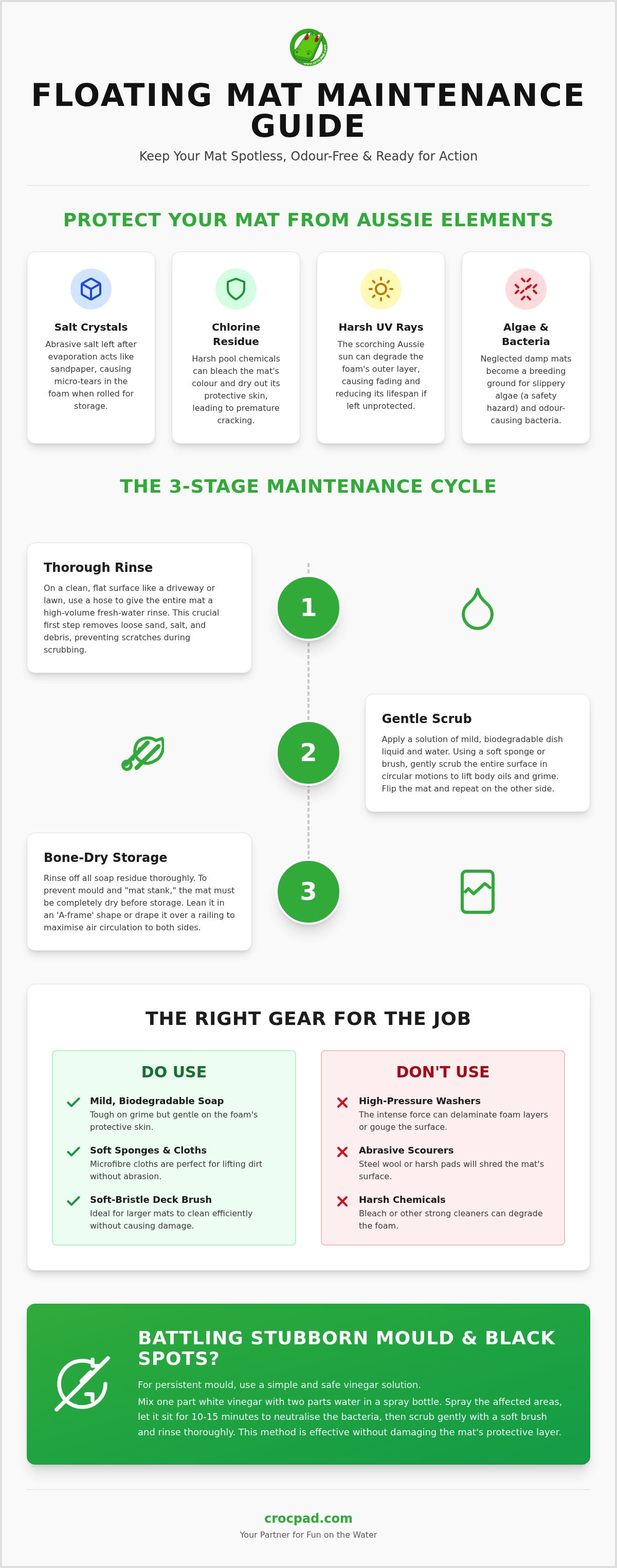
Ready to restore your gear to its former glory? The process is straightforward, but doing it right ensures you don't accidentally damage the marine-grade foam. First, find a flat, clean surface. A concrete driveway or a patch of lush lawn is ideal. Avoid gravel or dirt; these surfaces can trap grit under the mat and cause micro-tears while you work. Start with a high-volume fresh-water rinse to knock off loose sand, salt, and debris. When you're learning how to clean a floating water mat, this initial flush is critical because it prevents you from grinding abrasive particles into the surface during the scrubbing phase.
Recommended Cleaning Supplies
You don't need a chemist's warehouse to get a professional result. Stick to mild, biodegradable dish liquid or specialised marine cleaners. These options are tough on oils but gentle on the foam's protective skin. Use soft sponges, microfibre cloths, or a soft-bristle deck brush for the best results. Never use high-pressure washers. The intense force can delaminate the foam layers or create permanent gouges. Similarly, steer clear of abrasive scouring pads or steel wool. These tools will shred the surface and leave your mat vulnerable to water absorption.
The "Scrub and Flip" Method
Efficiency is key to a job well done. Work in sections to ensure 100% coverage. Apply your soapy solution and use circular motions with your soft-bristle brush. Pay extra attention to the edges and tether points; these areas are magnets for algae and grime. Once the top is done, give it a final flush. You must ensure zero soapy residue remains. Leftover soap creates a slippery hazard and can actually attract more dirt during your next outing. Keeping your Floating Water Mat in top shape ensures it's always ready for the next adventure.
Managing the weight of a wet mat requires a bit of muscle. A standard 5.5-metre mat can become surprisingly heavy once saturated on the surface. Enlist a mate to help you flip the mat so you can repeat the process on the underside. This systematic approach is the most effective way how to clean a floating water mat without missing the spots where bacteria hide. Finish with one last thorough rinse of the entire area, including the ground around the mat, to prevent re-contaminating your clean gear.
Removing Mould, Mildew, and Stubborn Stains
Even with the best intentions, a humid Aussie summer can sometimes get the better of your gear. If you've pulled your mat out of the shed only to find it dotted with stubborn black spots, you're dealing with mould. It's vital to distinguish between surface-level river silt and deep-set biological growth. While silt usually wipes away with the soapy solution we discussed in the previous section, mould requires a more targeted approach to kill the spores. Learning how to clean a floating water mat effectively means knowing when to reach for the natural remedies and when to bring out the big guns.
For most stains, a simple 50/50 mixture of white vinegar and water is your secret weapon. Vinegar is a natural antifungal that's remarkably effective at neutralising mould without attacking the structural integrity of the Floating Water Mat. Spray the solution directly onto the affected area and let it sit for at least 15 minutes before scrubbing. This gives the acetic acid time to penetrate the foam surface and kill the mould at its source. If you're dealing with sunscreen streaks or fuel residue from the boat, a gentle rub with a microfibre cloth and a bit of extra vinegar usually does the trick.
Natural Cleaning Alternatives
If vinegar doesn't quite cut it, try making a thick paste out of baking soda and a small amount of water. Apply this to greasy sunscreen marks or zinc stains and let it dry in the sun. The baking soda draws out the oils that have settled into the foam's texture. For mats that have lost their lustre, a splash of lemon juice in your rinse water can help brighten the foam. It provides a fresh scent that helps eliminate any lingering storage odours, leaving your gear smelling like a tropical getaway rather than a damp garage.
Chemical Safety for Foam Mats
Some competitors suggest using heavy-duty bleach for every mark, but this is a mistake that can lead to permanent damage. Pure bleach is far too aggressive and can cause the high-performance foam to become brittle or delaminate over time. If you must use bleach for extreme mould cases, strictly follow the 10:1 rule: ten parts water to one part bleach. Always test this solution on a small, hidden area on the underside of the mat first. Once you've treated the area, perform a massive fresh-water flush. You need to ensure every trace of the chemical is gone to protect both the mat and the environment. Be mindful of where you're working; bleach runoff can quickly kill your lawn or damage a timber deck if you aren't careful.
Drying and Storing Your Mat to Avoid 'Mat Stank'
Drying your gear is the most overlooked part of the maintenance process, yet it is arguably the most important. If you roll up your foam while it's still damp, you're essentially creating a five-star hotel for bacteria and mould. This is where the dreaded "mat stank" begins. We follow the Bone-Dry Rule: if it feels even slightly cool or clammy to the touch, it isn't ready to be put away. Moisture trapped between the layers of rolled foam will lead to permanent odours and structural degradation that no amount of scrubbing can fix later. Mastering how to clean a floating water mat must always conclude with a rigorous drying phase.
To get the best results, use sawhorses or the "A-frame" lean against a fence to allow gravity to pull water away from the surface. While the Australian sun is a powerful sanitiser, avoid leaving your mat out during the intense midday heat. Extreme UV can cause the foam to expand or warp if left for hours. Instead, aim for a shaded, breezy spot that encourages evaporation without the risk of heat damage. Once dry, roll the mat loosely to avoid permanent creases. Tight straps are great for transport, but for long-term storage, a bit of breathing room helps maintain the foam's memory and buoyancy.
The Perfect Drying Setup
Airflow is your best friend. Elevating the mat off the ground ensures that both sides dry simultaneously, preventing the underside from becoming a damp trap. Depending on the humidity, a full-sized mat can take several hours to dry completely. If you're in a rush, a leaf blower is a fantastic hack for clearing surface water from the textured grip before letting the air do the rest of the work. This simple step significantly reduces the total time required and ensures you aren't rolling up hidden pockets of moisture.
Off-Season Storage Tips
When the weather cools down, your storage strategy determines how your mat will look next spring. Never leave your gear on the garage floor where it can attract moisture or provide a nesting spot for rodents. We recommend using a Crocpad waterproof bag to provide an extra layer of protection against dust and pests. Store the mat in a cool, dry place away from direct sunlight and sharp objects. If you want to ensure your gear stays in pristine condition, browse our full range of Floating Water Mat accessories to find the perfect storage solution for your setup.
Consistency is key. By following these drying and storage protocols, you ensure that how to clean a floating water mat is a once-a-season deep clean rather than a weekly battle against grime. Proper care preserves the marine-grade integrity of the foam, keeping it soft, safe, and ready for your next adventure.
The Crocpad Advantage: Low-Maintenance Fun on the Water
When you invest in a Crocpad, you aren't just buying a toy; you're securing a piece of high-performance engineering designed for the rugged Australian coast. Choosing a premium Floating Water Mat means you spend more time relaxing and less time scrubbing. While cheaper alternatives often feature open-pore foam that acts like a sponge for river silt and bacteria, our marine-grade, closed-cell technology creates a formidable barrier. This non-absorbent surface is the reason why the process of how to clean a floating water mat is so much faster for Crocpad owners.
Generic mats often trap grime deep within their structure, leading to permanent staining and that unpleasant "stank" we've discussed. In contrast, the smooth, resilient skin of our mats allows dirt and salt to be rinsed away with minimal effort. You'll find that a quick fresh-water flush after a day on the bay is usually all it takes to keep the foam looking brand new. This ease of maintenance doesn't just save you time; it protects the structural integrity of the mat, ensuring it remains a buoyant and reliable platform for your family's weekend adventures.
Engineered for the Australian Lifestyle
Our mats are built to survive the harshest conditions on the planet. We use UV-stabilised foam that won't crumble, flake, or fade under the intense 2026 summer sun. This resilience is paired with tear-resistant layers that stand up to active play, jumping, and wrestling without losing their shape. We also prioritise safety by using high-visibility colours that make your mat easy to spot from a distance, even in busy waterways. This combination of durability and safety ensures your investment lasts for many summers, providing a high-performance space for recovery and play.
Ready for Your Next Adventure?
Before you hit the lake or the harbour, perform a quick maintenance check. Ensure your tether points are secure and give the surface a final wipe-down to remove any dust from the shed. A clean mat is a better-performing mat; it stays grippy underfoot and remains lightweight because it isn't carrying extra weight from dried-on mud or salt. Staying on top of how to clean a floating water mat ensures your gear is always ready for a spontaneous trip to the water. If you're looking to expand your collection of durable, adventure-ready gear, visit Crocpad to upgrade your summer gear today. Your next great memory on the water starts with equipment you can trust.
Maximise Your Adventure with a Pristine Mat
Your gear is an investment in leisure and recovery, so treating it with respect is the best way to ensure it lasts for years. By sticking to a simple routine of fresh-water rinsing and applying the "Bone-Dry" rule, you'll prevent the dreaded "mat stank" and keep your foam looking brand new. Mastering how to clean a floating water mat doesn't have to be a chore; it's a quick process that protects the high-performance, marine-grade integrity of your equipment. Remember to avoid harsh chemicals and always prioritise airflow during the drying phase to keep bacteria at bay.
As a trusted Australian brand, we design our products to withstand the harshest UV conditions our coastline can throw at them. When you choose quality, you get more time for play and less time spent on maintenance. If you're ready to elevate your summer setup with gear that's built for the long haul, browse the full range of durable Crocpad Floating Mats here. We'll see you out on the water for your next sun-soaked session.
Frequently Asked Questions
Can I use a pressure washer to clean my floating water mat?
No, you should never use a pressure washer on your mat. The intense force of the water can delaminate the foam layers or cause permanent gouges in the surface skin. Stick to a standard garden hose with a spray nozzle for a safe and effective rinse. This provides plenty of pressure to remove salt and sand without risking the structural integrity of your gear.
How do I get rid of the "wet dog" smell from my foam mat?
Eliminate that "mat stank" by using a 50/50 mixture of white vinegar and fresh water. Spray the solution across the entire surface and let it sit for 15 minutes to neutralise the odour-causing bacteria. The most important step is ensuring the mat is bone-dry before you roll it up for storage; moisture trapped inside is the primary cause of bad smells.
Is it safe to use bleach on a Crocpad floating mat?
You can use bleach only if it is heavily diluted and treated as a last resort for extreme mould. Stick to a strict 10:1 water-to-bleach ratio and always test a small, hidden area first. Pure bleach is far too aggressive and will eventually make the high-performance foam brittle. Always perform a massive fresh-water flush after using any chemical sanitiser to protect the foam.
How often should I clean my water mat during the summer?
You should rinse your mat with fresh water after every single outing to remove salt, chlorine, or lake silt. For a deeper clean, aim for once a month during the peak season. Staying consistent with these quick refreshes makes the overall process of how to clean a floating water mat much easier. It prevents grime from baking into the foam under the Aussie sun.
Can I leave my floating mat in the water overnight?
It is best to pull your mat out of the water at the end of the day. Leaving it submerged overnight encourages algae growth on the underside and increases the risk of the mat snagging on submerged debris. Taking five minutes to haul it onto the deck or beach ensures it stays in top condition and remains a safe, slippery-free zone for the kids.
What is the best way to remove algae from the bottom of the mat?
Use a soft-bristle deck brush and a bucket of mild, soapy water to tackle slippery algae buildup. For stubborn green patches, the vinegar solution mentioned earlier works wonders as a natural antifungal agent. Scrub in circular motions to lift the organic matter from the foam's texture, then rinse thoroughly. This systematic approach is the most effective way how to clean a floating water mat with algae issues.
How do I prevent my mat from fading in the sun?
Store your mat in a shaded area or a dedicated waterproof bag when you aren't using it. While Crocpad mats use UV-stabilised foam designed for local conditions, constant exposure to the midday sun can eventually dull the vibrant colours. Minimising direct UV contact during the drying phase and off-season storage is the best way to keep your gear looking sharp for years.
Can I use a pool cover cleaner on my foam mat?
Yes, you can use most pool cover cleaners provided they are pH neutral and biodegradable. These formulas are typically designed to be gentle on synthetic materials while breaking down oils and minerals. However, simple mild dish soap or specialised marine cleaners are often more cost-effective and just as powerful for maintaining the resilient surface of your high-quality foam mat.