
What if the highlight of your summer, that massive, high-energy splash, could be ruined by a single gust of wind or a few centimetres of missing water? You want your backyard to be the ultimate adventure zone, but the fear of a slide tipping over or the material perishing under the harsh Aussie sun can turn a fun afternoon into a stressful watch-party. It's vital to get the setup right, especially with the new Consumer Goods (Aquatic Toys) Safety Standard 2026 now in effect. This guide will help you master the essentials of inflatable pool slide safety, ensuring your setup is as secure as it is exciting.
We understand that navigating pool depth requirements and anchoring configurations feels like a lot of work when you just want to get the kids outside. You deserve the confidence that comes with high-performance gear designed for local conditions. We're going to provide a clear safety checklist and expert tips on maintaining structural integrity. You'll learn exactly how to secure your slide, choose durable materials that withstand UV damage, and keep the energy high all summer long.
Key Takeaways
- Discover why commercial-grade PVC-tarpaulin is the non-negotiable standard for structural integrity compared to flimsy supermarket alternatives.
- Learn how to calculate the perfect "Safe Zone" for inflatable pool slide safety by matching pool depth to your specific slide height.
- Master the "Wind Rule" and heavy-duty anchoring techniques to ensure your gear stays grounded during high-energy play.
- Identify the maximum weight capacities for your equipment to safely include adults in the backyard fun without risking damage.
- Explore how the Crocpad Mikros, Minima, and Megalo 3M ranges are engineered to balance premium durability with maximum summer thrills.
Why Inflatable Pool Slide Safety Starts with Material Integrity
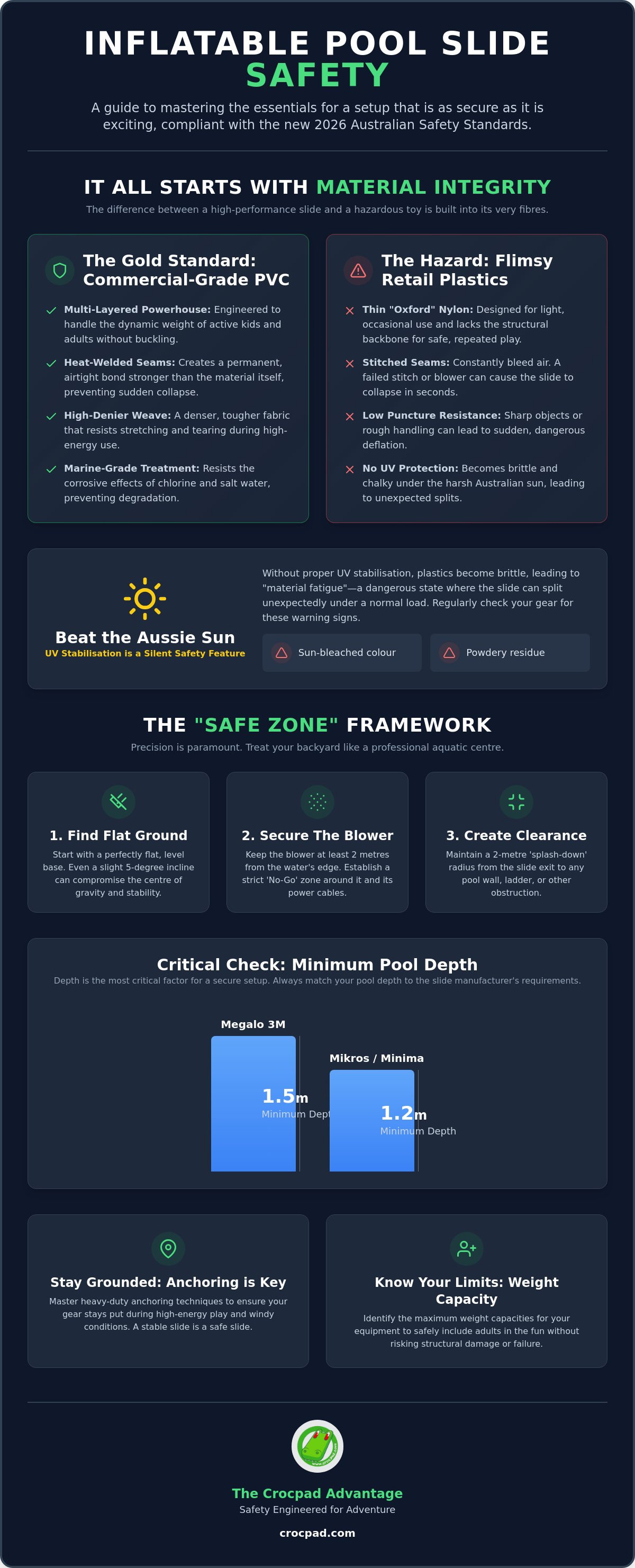
Safety isn't an afterthought. It's built into the very fibres of the product. Many people don't realise that Inflatable water slides sold in big-box retail stores are often made from thin, "Oxford" nylon or flimsy plastics. These materials are designed for light, occasional use and lack the structural backbone required for a safe summer. True inflatable pool slide safety begins with selecting heavy-duty, commercial-grade PVC tarpaulin. This material is a multilayered powerhouse engineered to handle the dynamic weight of active kids and adults without buckling or tearing under pressure.
The way a slide is put together matters just as much as what it's made from. Cheap retail slides usually feature stitched seams that allow air to bleed out constantly. If the blower fails or a stitch pops, the slide can collapse in seconds. High-spec slides use heat-welded technology to fuse the PVC together. This creates a permanent, airtight bond that is actually stronger than the surrounding material. It's the difference between a temporary toy and a piece of high-performance recreational equipment. Superior puncture resistance also prevents sharp objects or rough handling from causing sudden deflation, which is a major hazard when someone is mid-descent.
Commercial-Grade PVC vs. Retail Plastics
PVC-tarpaulin is the undisputed gold standard for inflatable safety because it combines high-tensile strength with extreme flexibility. We look for high denier counts, which indicate a denser, tougher weave that resists stretching and tearing during high-energy use. Choosing marine-grade materials is non-negotiable for Australian pool environments. These fabrics are specifically treated to resist the corrosive effects of chlorine and salt water, ensuring the slide doesn't degrade from the inside out.
UV Stabilisation: The Silent Safety Feature
The Australian sun is notoriously brutal on outdoor gear. Without proper UV stabilisation, standard plastics become brittle and chalky within a single season. This leads to "material fatigue," a dangerous state where the slide can split unexpectedly under normal loads. Maintaining high standards for inflatable pool slide safety means being vigilant about environmental wear and tear. Crocpad ensures maximum longevity by applying specialised UV-resistant coatings to every unit in their range. Always check your gear for "sun-bleaching" or a powdery residue on the surface. These are clear signs the material is perishing and is no longer fit for purpose. Investing in premium gear from crocpad.com ensures your setup survives the elements while keeping your family secure.
The "Safe Zone" Framework: Setting Up Your Backyard Waterpark
Creating a backyard oasis requires precision. You can't just drop a slide anywhere and hope for the best. The "Safe Zone" framework ensures maximum fun with zero accidents by treating your backyard like a professional aquatic centre. Start by scouting for perfectly flat ground. Even a slight five-degree incline can compromise the centre of gravity when multiple kids are climbing the ladder. A level base is the foundation of inflatable pool slide safety, preventing the unit from shifting or leaning during high-energy play.
The blower is the heart of the system, but it's also a piece of electrical equipment that needs respect. Keep it at least 2 metres away from the water's edge at all times. Establish a strict "No-Go" buffer zone around the unit and its power cables to prevent tripping hazards. This keeps the electrical components bone dry and ensures the airflow remains unobstructed. Organising your pool area into distinct zones for swimming and sliding is the best way to prevent mid-air collisions between users.
Measuring Pool Depth and Clearance
Depth is the most critical factor for a secure setup. For high-performance gear like the Megalo 3M, you need a minimum water depth of 1.5 metres at the landing point. Smaller models like the Mikros or Minima generally require at least 1.2 metres. Always check the specific manufacturer requirements for your inflatable water slide into pool setup before the first splash. Clearance isn't just about what's under the water. You must maintain a "splash-down" radius of at least 2 metres from the slide exit to any pool wall, ladder, or submerged bench. This ensures sliders don't bottom out or strike the edge of the pool during a high-speed entry.
Surface Selection and Protection
Soft, level grass is the ideal foundation for any inflatable. It provides natural grip for the base and makes anchoring into the earth simple and secure. If your only option is a hard surface like pavers or concrete, you must use heavy-duty protective rubber mats. This prevents the abrasive surface from wearing down the PVC material and provides a cushioned landing for anyone stepping off the slide ladder. Don't forget the return journey. Wet feet on slick tiles lead to nasty falls. Ensure the path from the pool back to the slide ladder is covered with non-slip runners or remains on the grass to maintain inflatable pool slide safety. To see the full range of high-spec gear designed for these environments, check out the premium pool slides available now.
Anchoring and Inflation: Preventing Tips and Blow-Aways
Imagine your backyard setup as a high-performance vessel. An inflatable slide is essentially a giant sail, and without proper anchoring, even a moderate breeze can turn your waterpark into a hazard. Mastering inflatable pool slide safety means understanding the physics of the "sail effect." When wind catches the broad side of a slide, it creates massive lateral force. To counter this, you must utilise every single heavy-duty D-ring provided on the unit. Don't take shortcuts. Each point is strategically placed by the manufacturer to distribute load and keep the structure vertical during high-energy play.
Tension is your best friend. Tie-down straps should be taut but not so tight they deform the PVC material. If you're anchoring to the pool coping, use specialised pool-edge systems as outlined in Australian Standard AS 3533.4.5. For lawn setups, heavy-duty ground stakes are the standard, but they must be driven in at an angle away from the slide for maximum grip. If you're on a hard surface where stakes aren't an option, high-capacity sandbags are essential. A slide that shifts even a few centimetres can change the landing angle, increasing the risk of a slider hitting the pool edge or bottoming out in the shallow end.
Securing the Slide in Australian Wind Conditions
Australia is famous for sudden afternoon southerly busters and gusty sea breezes. You need to be vigilant. While many operators suggest caution at lower speeds, Safe Work Australia mandates a hard cutoff: operation must cease, and the inflatable must be evacuated and deflated when wind speeds exceed 38-40 km/h. We recommend keeping a handheld anemometer nearby or monitoring local weather apps closely. If the slide starts to sway or the base lifts, it's time to pull the plug. Double-anchoring the top tether points is a pro move that provides significantly more lateral stability during those unexpected gusts.
Blower Safety and Electrical Management
Constant air pressure is the only thing keeping your slide from becoming a pile of PVC. A struggling blower is a major safety risk. If you hear the motor pitch change or notice the slide feeling "soft," evacuate everyone immediately. Keep the blower at least 2 metres from the pool to avoid splashes. Every electrical component must be connected via a Residual Current Device (RCD) to prevent shocks in a wet environment. Check the air intake regularly for grass clippings or stray pool toys. Blocked intakes cause motors to overheat and fail, leading to a rapid loss of pressure that compromises inflatable pool slide safety. For high-spec gear that includes robust anchoring kits, visit crocpad.com to explore the range.
Slide Rules: Managing Weight Limits and Adult Use
Don't let the kids have all the fun. One of the biggest myths in backyard recreation is that inflatables are strictly for the little ones. While that might be true for flimsy "toy-grade" products, high-performance equipment is a different beast entirely. Maintaining inflatable pool slide safety while allowing adults to join the action requires a clear understanding of weight limits and structural physics. You need gear that can handle the dynamic load of a grown adult without compromising the unit's stability or the slider's safety.
Supervision is the backbone of a successful pool party. It isn't just about watching the water. It's about managing the flow of energy. When the music is loud and the kids are excited, it's easy for rules to slide. Assigning a dedicated adult to monitor the slide ensures that every person follows the correct protocol. This proactive approach prevents the chaotic "free-for-all" that leads to accidents. Remember, even the most durable slide relies on the people using it to stay within its design parameters.
Adults on Inflatables: Can They Handle the Weight?
The Megalo 3M Inflatable Water Pool Slide is engineered for serious adventure. It features a massive weight capacity that comfortably supports adults, provided the setup meets the depth requirements we established in previous sections. This is possible because of a sophisticated multi-chamber air design. Unlike cheap slides that sag under pressure, these internal chambers distribute weight evenly to prevent users from "bottoming out" and striking the pool edge or floor. The Minima Pool Slide balances portability with robust support, offering a high-strength alternative that doesn't sacrifice durability for its more compact size.
The Golden Rules of Sliding
A busy pool party is a high-energy environment, but it needs structure to stay safe. Enforce these non-negotiable rules to keep the vibes high and the risk low:
- One at a time: Never allow multiple people on the ladder or slide at once. This prevents mid-air collisions and ensures the anchor points aren't overstressed.
- The 'Clear Water' rule: The next slider must wait until the previous person has completely exited the landing zone. A slider hitting a swimmer is a primary cause of avoidable injuries.
- No sharp objects: Prohibit jewellery, belt buckles, and watches. Even commercial-grade PVC can be damaged by a sharp metal edge, leading to a puncture that halts the fun.
The "Feet-First" mandate is your most important safety tool. Never allow head-first sliding. The risk of neck or spinal injury is too great, especially in a backyard pool where depths vary. By keeping everyone sliding on their bottoms or backs, you ensure a safe, predictable entry into the water every time. Ready to upgrade your backyard setup with gear that the whole family can enjoy? Explore the full range of heavy-duty pool slides and bring professional-grade fun to your home.
The Crocpad Advantage: Safety Engineered for Adventure
Choosing the right gear for an Aussie summer isn't just about finding the biggest splash. It's about finding a brand that understands the unique demands of our environment. Inflatable pool slide safety is the core of our design philosophy. We don't just build toys; we engineer high-performance recreational equipment that balances adrenaline-pumping fun with rigorous structural standards. Being an Australian-owned brand means we know exactly what our backyards need to withstand, from the scorching UV rays to the sudden wind gusts we've discussed in previous sections.
Our commitment to your safety extends beyond the initial purchase. We believe that a secure setup is a well-maintained one. That's why our products are designed for easy inspection and straightforward maintenance. We provide the advice and gear you need to keep your equipment in peak condition season after season. When you choose a Crocpad, you're partnering with experts who prioritise your peace of mind so you can focus on the high-energy excitement of the perfect pool party.
The Mikros and Megalo 3M: Safety in Every Size
Every slide in our range is built with specific safety touchpoints tailored to its size and use. The Mikros Pool Slide features reinforced, heavy-duty handles and non-slip steps to ensure even the youngest adventurers have a secure grip while climbing. For those with larger pools or commercial requirements, the Megalo 3M Inflatable Water Pool Slide offers over-engineered stability. Its massive footprint and sophisticated air-chamber system provide a rock-solid foundation that resists tipping, even during the most energetic use. We've made sure that every seam and valve is accessible, making it simple to check for inflatable pool slide safety before every session.
Summer Ready with Crocpad
The true Crocpad experience comes from building a complete aquatic adventure zone. Our slides are designed to integrate seamlessly with other high-performance gear like the Floating Water Mat, allowing you to create a modular waterpark in your own backyard. This versatility doesn't come at the expense of security. Because we're local, you have access to Australian-based support and expert guidance whenever you need it. We're here to help you organise the ultimate summer setup that's durable, reliable, and ready for action. Don't settle for supermarket-grade plastics when you can have professional-spec durability. Explore our range of heavy-duty inflatable slides today and elevate your summer with confidence.
Own the Pool This Summer
Mastering inflatable pool slide safety isn't about dampening the fun; it's about creating a secure environment where adventure can thrive. You now have the essential checklist to transform your backyard into a professional-spec waterpark. Remember that structural integrity starts with commercial-grade materials and ends with precise anchoring. By following the "Safe Zone" framework and enforcing strict slide rules, you ensure every splash is a win for the whole family.
We're proud to be an Australian owned and operated brand that understands the rigours of our local climate. Our slides are built from heavy-duty, commercial-grade PVC, meaning they're tough enough for both kids and adults to enjoy all day long. Don't settle for flimsy retail toys that can't handle the heat or the weight. It's time to invest in gear that is as ambitious as your summer plans.
Upgrade your summer with a heavy-duty Crocpad Inflatable Slide and get ready for a season of epic, worry-free memories. We'll see you in the water!
Frequently Asked Questions
Is it safe for adults to use inflatable pool slides?
Yes, adults can safely use commercial-grade inflatable slides that are specifically engineered for high weight capacities. While flimsy retail toys often fail under adult loads, premium models like the Megalo 3M feature reinforced PVC and sophisticated air-chamber systems that provide robust support. Always verify the weight rating in your user manual before use. Maintaining inflatable pool slide safety for adults also means ensuring the pool depth is sufficient to prevent anyone from bottoming out during a high-speed entry.
What is the required pool depth for an inflatable water slide?
You need a minimum water depth of 1.2 to 1.5 metres depending on the height and speed of your specific slide. Smaller units like the Mikros generally require 1.2 metres of clearance, while larger, high-energy models like the Megalo 3M demand at least 1.5 metres. This depth is vital to protect sliders from striking the pool floor. Always measure the depth at the exact splash-down point and ensure the landing zone is clear of submerged benches or steps.
Can I use an inflatable slide with an above-ground pool?
You can use an inflatable slide with an above-ground pool as long as the pool meets the necessary depth and structural requirements for a safe landing. The slide must be positioned on level, stable ground outside the pool with the exit point aligned perfectly over the deep end. Because above-ground pools often have narrower top ledges, you must be extra vigilant with anchoring. This prevents the slide from shifting or putting undue pressure on the pool's frame or liner during use.
How do I stop my inflatable slide from blowing away in the wind?
Secure every heavy-duty D-ring to ground stakes or high-capacity sandbags to prevent the "sail effect" in gusty conditions. Ground stakes are the gold standard for lawn setups, while sandbags are essential for hard surfaces like pavers or decking. Monitor local weather closely and deflate the slide immediately if wind speeds reach the 38-40 km/h threshold. This proactive approach to inflatable pool slide safety ensures your gear doesn't tip or become airborne during a sudden afternoon buster.
What should I do if my inflatable slide gets a small puncture?
Repair small punctures immediately using a specialised PVC patch and adhesive from your repair kit to maintain structural integrity. Clean and dry the area thoroughly before applying the patch to ensure a permanent, airtight bond. While commercial-grade PVC is incredibly tough, stray sharp objects or jewellery can still cause damage. Regular inspections allow you to catch and fix minor nicks before they grow, ensuring your backyard waterpark remains ready for action all summer long.
How many children can safely be on the slide at the same time?
Only one person should be on the slide or the ladder at any given time to prevent collisions and maintain stability. This "one-at-a-time" rule is a non-negotiable safety standard that ensures the slide's centre of gravity remains balanced. Even though high-spec slides can support significant weight, having multiple children jumping or climbing simultaneously increases the risk of accidental falls. Wait for the previous slider to completely exit the landing zone before the next adventurer starts their descent.
Does the blower need to stay on while the slide is in use?
The blower must remain switched on and running continuously while the slide is in use to maintain constant air pressure. Inflatable slides rely on this steady airflow to keep the PVC chambers rigid and support the weight of the users. If the blower is turned off or loses power, the structure will begin to deflate rapidly, which can lead to entrapment or falls. Always ensure the blower is connected to a reliable power source via an RCD for maximum electrical safety.
How do I clean and store the slide to ensure it stays safe for next year?
Clean your slide with mild soap and fresh water, then ensure it is 100% dry before folding it for winter storage. Storing a damp slide leads to mould and mildew, which can rot the PVC fibres and weaken the heat-welded seams over time. Once completely dry, roll the slide tightly and store it in a cool, dry place away from direct sunlight and pests. Proper storage preserves the material's strength, ensuring your gear is high-energy and adventure-ready for the next season.